If you need a DS-260 Immigrant Visa Lawyer to help you complete the DS-260 online, you are in the right place.
This form is one of the most important documents in the consular process to obtain lawful permanent residence from outside the United States. A mistake, inconsistency, or incorrectly completed field can lead to delays or even a denial.
At Curbelo Law, we guide you through every stage of consular processing, including the preparation and review of Form DS-260.
On this page
What Is Form DS-260 and How Can a DS-260 Immigrant Visa Lawyer Help You Complete It Online?
Form DS-260, known as the Online Immigrant Visa Application, is the official application that people must complete when seeking a Green Card through consular processing outside the United States. Key points include:
- It serves a similar function to Form I-485, which is used for adjustment of status inside the United States.
- This form is completed online through the U.S. Department of State’s CEAC portal and is submitted under oath.
- Consular officers will compare your answers against your civil documents, travel history, and government databases.
- Any inconsistency can result in delays, requests for additional documents, or issues at the interview.
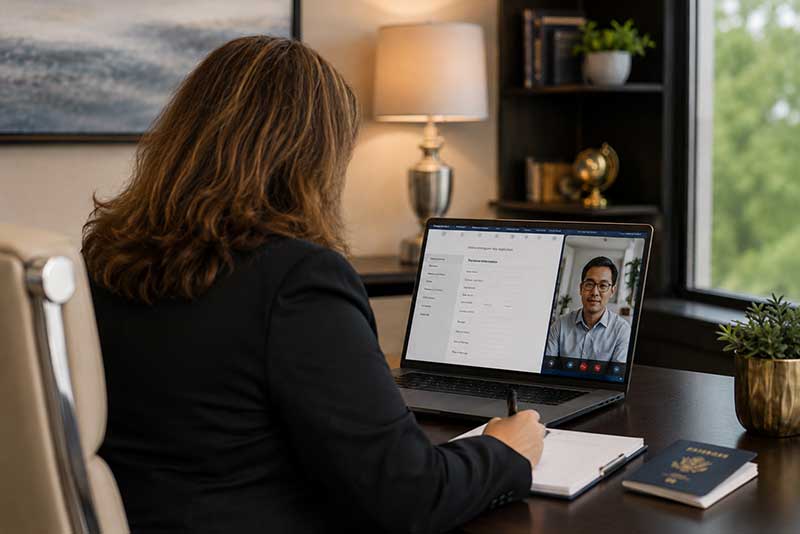
That is where online legal guidance can make a real difference. An attorney can review your information before you enter it into the portal, identify inconsistencies with your documents, and advise you on how to answer sensitive questions correctly.
When Is Form DS-260 Used?
DS-260 is used when the Green Card applicant lives outside the United States and is processing the case through a U.S. embassy or consulate.
Generally, this takes place after USCIS approves an immigrant petition, such as:
- Form I-130 for family-based petitions, or
- Form I-140 for employment-based cases.
Once USCIS approves the petition and transfers it to the National Visa Center (NVC), the NVC creates the case and sends a welcome letter with the information needed to access the CEAC portal and begin the process. DS-260 is one of the steps within that process.
Steps to Complete Form DS-260
The general process to complete and submit DS-260 follows these steps:
- Access the CEAC portal using your NVC case number and invoice ID number from the NVC welcome letter.
- Pay the required fees through the same portal.
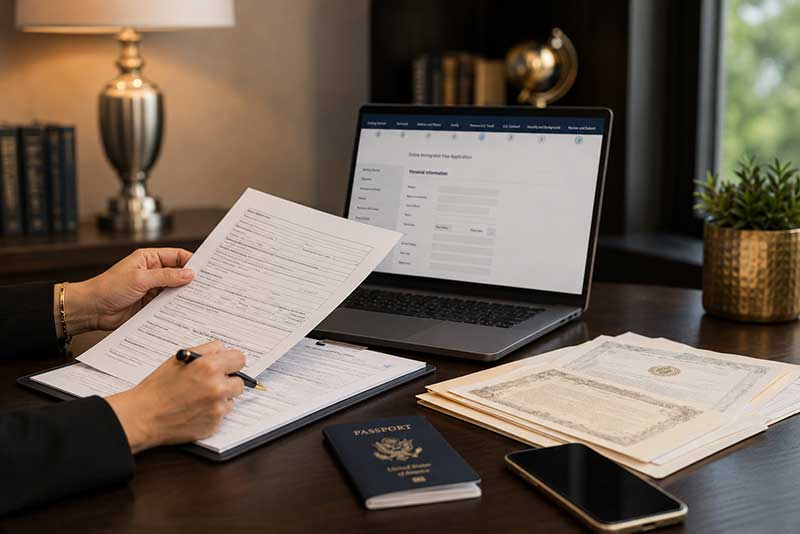
- Complete Form DS-260 with your personal information, address history, employment history, family information, prior travel to the United States, and answers to security and background questions.
- Submit the form and save the confirmation page, which you will need for the consular interview.
- Upload civil documents in the CEAC portal, including birth certificates, marriage certificates, police certificates, and other required documents.
- Wait for the NVC to mark the case as documentarily qualified before the interview can be scheduled.
How the CEAC Portal Works and What You Should Know
The CEAC portal, where DS-260 is completed and submitted, is a government platform with specific quirks you should understand before you begin:
- It times out quickly: If there is no activity for a short period, the system may log you out without saving. It is best to prepare your answers in a separate document before entering them.
- Auto-save is not guaranteed: You must manually save frequently during the process.
- Access can be blocked after multiple attempts: If you try to log in too many times within a short period, the system may temporarily block access from your IP address.
- It is not easy to correct after submission: If you discover an error after you submit the form, you may need to request that the NVC unlock it, which can take time.
For these reasons, preparing your information in advance and getting professional guidance before entering the portal can significantly reduce the risk of errors.
What Information Do You Need to Fill Out DS-260?
Form DS-260 is long and detailed. Before you start, you should have the following information available:

Personal information
- Full name exactly as it appears on your passport.
- All names you have used previously, including maiden names, religious names, or nicknames.
- Date and place of birth.
Address history
- All addresses where you have lived since age 16. In many cases, the form requests history starting at this age or for specific time periods.
- Move-in and move-out dates.
Employment and education history
- Current and prior jobs with dates.
- Schools attended with dates.
Family information
Information for the following family members:
- Parents.
- Current spouse.
- Prior spouses.
- Children, including those who will not immigrate.
Contact information
- All phone numbers and email addresses used in the last five years.
- Social media platforms and usernames used in the last five years.
Travel history
- Prior trips to the United States with dates and visa types.
- Visa denials in any country.
- Prior immigration violations, if applicable.
Supporting Documents Needed for DS-260
Along with Form DS-260, both the applicant and the sponsor must submit supporting documentation. The most common documents include:
From the applicant
- A valid passport with at least six months of validity beyond the intended stay.
- Long-form birth certificate.
- Marriage certificate, if applicable.
- Divorce decrees or death certificates for a prior spouse, if applicable.
- Police certificates from the required countries based on your age, length of residence, and the U.S. Department of State’s country-specific instructions.
- Military records, if applicable.
- Passport-style photos according to the consulate’s instructions.
From the sponsor
- Form I-864, Affidavit of Support.
- Proof of income and tax returns.
- Proof of U.S. domicile.

If the NVC requests additional information at any point, you can learn about a request for evidence (RFE) in immigration and how it may affect your case.
Common Mistakes When Completing DS-260
DS-260 is an application submitted under oath, and consular officers compare it against your original documents. These are some of the most common mistakes that cause problems:
- Name inconsistencies: Using different spellings of your name between your passport, birth certificate, and DS-260.
- Leaving out marriages or children: All prior marriages and all children must be disclosed, even if they will not immigrate.
- Gaps in address or employment history: Dates should be continuous and consistent with your documents.
- Underreporting travel or visa denials: Any prior travel to the United States or visa denial in any country must be disclosed.
- Incorrectly answering security questions: If a background question requires a “Yes,” trying to fix it after submission can lead to significant delays.
- Poorly scanned documents: Illegible, incomplete, or shadowed files can trigger re-submission requests that delay the case for weeks.
What Happens After You Submit Form DS-260?
After you submit the form, the process continues with these steps:

1# NVC review
The NVC reviews Form DS-260, the uploaded civil documents, and the sponsor’s financial evidence.
When everything is complete and accepted, the case receives “documentarily qualified” status and the consular interview can be scheduled.
2# Medical exam
Before the interview, the applicant must complete a medical exam with a physician authorized by the specific consulate. This typically includes vaccine verification and a general health exam.
3# Consular interview
The interview takes place at the U.S. embassy or consulate in the applicant’s country.
The consular officer verifies the DS-260 information, reviews original documents, and determines eligibility for the immigrant visa.
4# Visa issuance
If the visa is approved, the consulate will explain how you will receive your passport and the documents you must present when you enter the United States.
Once admitted by CBP with an immigrant visa, the person becomes a lawful permanent resident.
If your case involves a marriage-based visa, you can prepare by reviewing marriage-based Green Card interview questions before the consular interview.
How Much Does It Cost to File Form DS-260?
Form DS-260 itself does not have a filing fee. However, consular processing includes other required fees:
- Immigrant visa fee (IV fee): It depends on the category. For family-based cases, it is often $325; for employment-based cases, $345; and other categories may vary.
- Affidavit of Support fee (AOS fee): Approximately $120 in most family-based cases.
- USCIS Immigrant Fee: Paid after the immigrant visa is issued and before traveling to the United States, with limited exceptions. Always confirm the current amount directly with USCIS.
- Medical exam: The cost varies by the authorized physician and the country.
NVC fees are paid through the CEAC portal. The USCIS Immigrant Fee is paid separately to USCIS after visa approval, with limited exceptions.
Why Is It Helpful to Have a Lawyer for DS-260?
Although DS-260 can be completed without legal assistance, many cases become complicated due to details that seem simple but carry major consequences. Our immigration attorney can help you:
- Confirm that your DS-260 information is consistent with all of your civil documents.
- Identify issues that could create problems at the interview, such as prior immigration violations, previous visa denials, or a criminal record.
- Prepare clear explanations for any “Yes” answers in the security and background section.
- Advise you on what additional documents may strengthen your case.
- Prepare you for the consular interview with practice questions and mock interview prep.
If your case involves a prior visa denial, review what to do if your visa application was denied before starting the process again. And if inadmissibility issues may apply, learn about a waiver for the United States and how it can affect the case.
Frequently Asked Questions About Form DS-260
Who completes Form DS-260?
It is completed by the beneficiary of the immigrant visa petition, meaning the person seeking a Green Card who is outside the United States.
If the applicant has dependent minors included in the case, they must also complete their own forms.
Where do you complete Form DS-260?
It is completed exclusively online through the U.S. Department of State’s CEAC portal. It cannot be filed by mail or through any other method.
To access it, you need your NVC case number and invoice ID number from the NVC welcome letter.
How much does DS-260 cost?
The form itself does not have a filing fee. Consular processing costs include separate fees paid through the CEAC portal, plus the cost of the medical exam and the USCIS Immigrant Fee, which you should verify directly with USCIS.
Can I bring a lawyer to my visa interview?
In many cases, yes, but policies vary by the specific consulate.
Check with the U.S. consulate in your country for its procedures. In most situations, preparation with an attorney beforehand is the most valuable part of the process.
Is it worth using an immigration lawyer for DS-260?
It depends on the complexity of your case. If your immigration history is straightforward, you may be able to complete it on your own with careful attention.
However, if you have prior visa denials, past immigration violations, a criminal record, or a complicated life history, legal guidance can significantly reduce the risk of errors that could affect the outcome.
Who can help me with my immigration case?
A licensed immigration attorney is the right professional to guide you through this process. Avoid “notarios” or non-attorney preparers, as they are not authorized to provide legal advice and can make mistakes that harm your case.
Completing DS-260 correctly from the start is much easier than trying to fix errors after you submit it.
At Curbelo Law, we review your information before you enter it into the portal, identify potential issues in your history, and prepare you for the consular interview.
If your ultimate goal is lawful permanent residence, you can start by understanding how to get a Green Card and what role DS-260 plays in that process. Contact us to evaluate your situation and make sure every step is properly prepared.