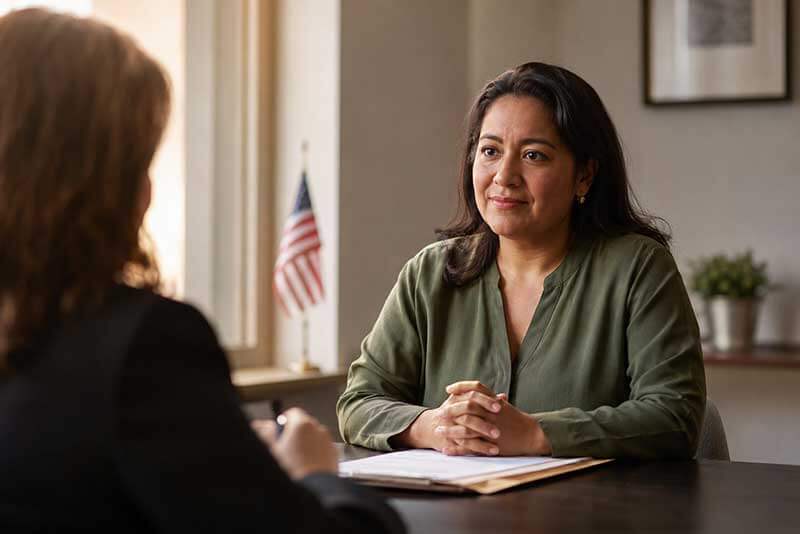
Receiving an appointment notice for a U.S. residency interview through VAWA can raise many questions and concerns. Understanding how the process works can help you arrive better prepared.
However, not all VAWA cases require an interview, and under certain circumstances, USCIS may approve an adjustment of status application without an in-person appointment.
If you received an interview notice, Curbelo Law’s immigration lawyers in New Jersey can help you review your case file and prepare for the process.
On this page
What Is VAWA and Why Might There Be a Green Card Interview?
VAWA allows certain victims of abuse or extreme cruelty to seek immigration relief without depending on the abuser.
The process may include:
- Form I-360: To file a VAWA self-petition.
- Form I-485: To apply for adjustment of status and obtain a Green Card when the person is eligible.

For detailed information about who may qualify, the requirements, and the documents needed, see our guide to the VAWA visa.
Why Might USCIS Require an Interview?
USCIS may schedule a VAWA Green Card interview to:
- Confirm information in the case file.
- Review the evidence submitted.
- Clarify dates, relationships, or possible inconsistencies.
- Determine whether the person meets the applicable requirements.
For this reason, receiving an interview notice does not necessarily mean there is a problem with the case.
VAWA is also not the only option available to people who have experienced abuse. Depending on the circumstances, other forms of relief may be available, such as asylum based on domestic violence in the United States.
Can You Get a VAWA Green Card Without an Interview?
In certain cases, it may be possible to obtain a VAWA Green Card without an interview.
The decision will depend on the circumstances of the case. USCIS may waive the interview when it determines that it has enough information to make a decision.
However, keep in mind that:
- An interview waiver is not guaranteed.
- Each case is reviewed based on its own circumstances.
- Having complete documentation does not automatically mean USCIS will waive the interview.
Therefore, a VAWA Green Card without an interview may be possible, but USCIS retains the authority to schedule an appointment when it considers one necessary.
When Can USCIS Require an Interview in a VAWA Case?
An interview may occur at different stages of the process, depending on which forms are pending and the circumstances of the case.
For example, USCIS may schedule an interview:
- While Form I-360 is pending: Current policy allows USCIS to interview certain VAWA self-petitioners even if they have not yet filed Form I-485.
- During adjustment of status: If you filed Form I-485 to obtain a Green Card, USCIS may require an interview before making a decision.
- When Form I-360 and Form I-485 are pending at the same time: The agency may review matters related to both filings during the appointment, as applicable.
- After VAWA approval: An approved Form I-360 self-petition does not necessarily mean USCIS will waive the Green Card interview. If Form I-485 remains pending, the agency may schedule an appointment before deciding the adjustment of status application.
For this reason, an interview is not limited to the final stage of the Green Card process. When USCIS schedules it will depend on the pending filing and what the agency needs to evaluate in the individual case.

What Happens During a VAWA Green Card Interview?
The experience during a VAWA Green Card interview can vary from case to case. The USCIS notice will state the date, time, and office where you must appear.
If the interview concerns adjustment of status, you will be required to answer questions under oath or affirmation. Topics that may be reviewed include:
- Your identity and personal information.
- Information included in Forms I-360 and I-485, when applicable.
- Your relationship with the abuser.
- Important dates and events.
- Evidence previously submitted.
- Your immigration history, including entries into and departures from the United States.
- Any information USCIS needs to clarify.
Not every interview is the same. The questions will depend on the facts, forms, and documents in each case.
VAWA cases are also subject to special confidentiality protections, and USCIS provides specialized training for handling these interviews.
What Questions Are Asked at a VAWA Green Card Interview?
There is no single questionnaire used for every applicant. However, questions may fall into categories such as:
- Personal information. This may include your name, address, date of birth, and immigration history.
- Relationship with the abuser. For example, how the relationship began, periods of living together, marriage, or separation, when applicable.
- Abuse or extreme cruelty. These questions may involve relevant facts about the mistreatment and how it affected your situation.
- Documents submitted. Questions may address dates, statements, messages, or other evidence included in the case file.
- Possible inconsistencies. These may involve differences among forms, statements, or documents that the officer needs to clarify.
You should not memorize answers. If you do not remember a date or detail exactly, it is better to say so than to guess.

Can You Attend With an Attorney or Interpreter?
You may attend with an attorney or accredited representative who is properly entered as your representative in the case through Form G-28.
Your representative may accompany and advise you during the interview, although you will be the person who must answer questions directed specifically to your case.
If you need an interpreter, carefully review the USCIS notice and follow the applicable instructions for the appointment.
What Documents Should You Bring to a VAWA Interview?
The first step is to review the USCIS notice because it may list specific documents you must bring.
Depending on your case, it may be helpful to bring organized documentation such as:
- Your passport and identification documents.
- Form I-94, if applicable.
- A U.S. work permit, if you have one.
- Notices related to Forms I-360 and I-485.
- Copies of forms and documents previously submitted.
- Documents related to the family relationship and shared residence.
- Additional evidence requested by USCIS.
- Documents related to your immigration history.
You do not need to obtain a specific type of evidence solely because someone else used it in their case.
Submitting more documents does not necessarily make a case stronger. The evidence should be relevant, consistent, and connected to the issues USCIS needs to evaluate.
If a document you plan to submit is in another language, it must include a complete English translation with the required certification.
How Should You Prepare for a VAWA Interview?
Preparing does not mean memorizing your story. The most important thing is to understand what you already submitted to USCIS and be able to explain your case honestly.
Before the appointment, it may be helpful to:
- Review the forms, statements, and evidence you submitted.
- Review the most important dates and events.
- Prepare a timeline to help you place events in context more easily.
- Identify errors or differences that may require an explanation.
- Tell your attorney about any changes that occurred after you filed the application.
- Organize your documents so you can find them quickly.
- Ask the officer to repeat or rephrase a question if you do not understand it.
- Clearly state when you do not remember a date or detail.
If you need a break during the interview, you can tell the officer. You should also avoid exaggerating, making up information, or trying to hide an inconsistency.
What Happens After a VAWA Interview?
USCIS does not necessarily make a decision on the same day.
After reviewing the interview and the case file, USCIS may:
- Approve the case: If USCIS determines that the applicable requirements have been met.
- Request additional evidence: Through a Request for Evidence (RFE).
- Keep the case under review: While completing additional checks.
- Deny the application: If USCIS concludes that one or more requirements were not met.
If you receive an additional request or a negative decision, carefully review the notice before responding. The options available will depend on the form involved and the reasons USCIS provides.
Frequently Asked Questions About VAWA Green Card Interviews

Do All VAWA Cases Require an Interview?
No. USCIS may decide certain cases without an interview, although it retains the authority to require the applicant to appear when it needs to review or clarify information.
Can USCIS Approve My Green Card Without an Interview?
Yes. USCIS may waive the adjustment of status interview in certain cases. The decision will depend on the specific circumstances of the case.
What Is a VAWA Green Card Interview Like?
An officer may review your identity, immigration history, forms, relationship with the abuser, and other information needed to determine your eligibility.
What Types of Questions Are Asked at a VAWA Green Card Interview?
You may be asked about personal information, living arrangements, your relationship with the abuser, abuse or extreme cruelty, immigration history, and possible inconsistencies in the case file.
How Long Does It Take to Get a Green Card After VAWA Approval?
There is no single timeline. Among other factors, it depends on whether you have already filed Form I-485, visa availability when applicable, and the processing of your application.
While your case remains pending, it may also be important to know what happens if you need to travel. See our guide on whether you can leave the country with a pending VAWA case
How Can Curbelo Law Help With Your VAWA Interview?
At Curbelo Law, attorney Carolina T. Curbelo has more than 10 years of immigration experience and has worked with people facing domestic violence and other sensitive immigration matters.
Our team can help you review your case file and evidence, identify potential inconsistencies, organize your documents, and prepare for questions that may come up during the interview.
If you are seeking a VAWA Green Card without interview but received an interview notice, contact Curbelo Law in New Jersey to evaluate your case and prepare before appearing before USCIS.