


A new decision from the Board of Immigration Appeals (BIA) changes how certain travel with advance parole may affect people who accrued unlawful presence in the United States.
On August 13, 2026, the BIA published Matter of Delcarmen-Lara, 29 I&N Dec. 830, holding that temporarily leaving the United States with advance parole can count as a departure for purposes of the ground of inadmissibility analyzed in the case.
The decision also:
- Overruled the 2012 precedent Matter of Arrabally and Yerrabelly.
- Changed an interpretation that had been in effect for approximately 14 years.
- Applies prospectively.
- Does not automatically make every trip with advance parole trigger an immigration penalty.
For this reason, people who have accrued unlawful presence should review their immigration history before traveling.
On this page
What Did the BIA Decide About Advance Parole?
The central holding in Matter of Delcarmen-Lara is that traveling with advance parole can be considered a departure from the United States for purposes of INA §212(a)(9)(B)(i)(II).
This provision may make a person inadmissible for 10 years if they:
- Accrued one year or more of unlawful presence in the United States.
- Later departed or were removed from the country.
- Seek admission again within the period established by law.
Having an approved advance parole document, by itself, does not eliminate the consequences of unlawful presence accrued in the past.
What Changed From the Previous Rule?
Since 2012, Matter of Arrabally and Yerrabelly had established that a temporary departure with advance parole should not be treated as a “departure” under this unlawful presence provision.
The BIA has now changed that interpretation. Under the new decision, the statutory language does not contain a specific exception for people who leave the United States using advance parole.
For that reason, the BIA expressly overruled the prior precedent. In other words, having authorization to travel no longer means a person can assume that leaving the United States will be neutral with respect to this ground of inadmissibility.
Can Travel Trigger Unlawful Presence Bars?
In general, depending on a person’s immigration history, travel may trigger certain immigration bars related to having been out of lawful status in the United States.
The law provides for different periods of inadmissibility related to unlawful presence. These include:
- More than 180 days but less than one year: A 3-year bar may apply in cases that meet the legal requirements.
- One year or more: A 10-year bar may apply after a departure or removal followed by a new request for admission within that period.
It is important to distinguish that Matter of Delcarmen-Lara directly addressed the 10-year bar under INA §212(a)(9)(B)(i)(II).
In other cases, the consequences may vary depending on how much unlawful presence the person accrued and their individual circumstances. Keep in mind that this does not mean every person with advance parole automatically becomes inadmissible.
What If Advance Parole Was Approved Before the New Decision?
Having advance parole approved before August 13, 2026, does not mean that a later trip will be governed by the previous rule.
The new interpretation applies prospectively. Therefore, a person who received the document before the decision but has not yet traveled should consider the BIA’s new standard before using it.
This is different from trips that had already taken place before the change, to which the BIA decided not to apply the new interpretation retroactively.

Does the New Rule Affect Previous Travel?
The BIA decided to apply its new interpretation prospectively. This point is important because the Board recognized that it was replacing a precedent on which many people had relied for years.
In the specific case, Delcarmen-Lara returned to the United States on parole on January 1, 2024. The BIA did not apply the new interpretation to that trip to find her inadmissible under this rule.
This means the new interpretation is relevant to travel occurring on or after August 13, 2026. Earlier trips should be analyzed based on the circumstances and rules that applied at the time.
Does Advance Parole Guarantee Reentry Into the United States?
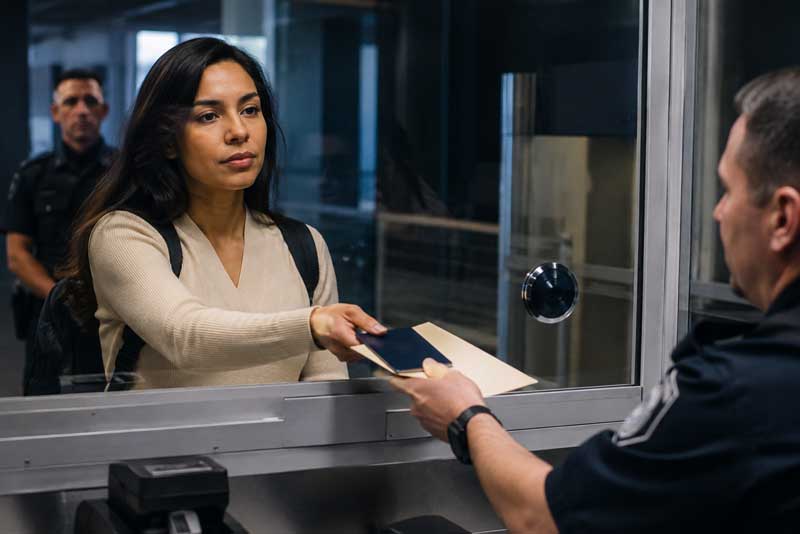
No. Advance parole allows a person to travel and present themselves again at a port of entry to request parole, but it does not guarantee that the person will be allowed to return.
CBP warns that:
- The person remains subject to immigration inspection.
- Potential grounds of inadmissibility may be reviewed.
- Having advance parole does not require DHS to grant parole upon return.
In simpler terms, having an approved travel authorization does not necessarily mean that leaving the United States is safe from an immigration standpoint.
Who Should Review Their Case Before Traveling?
The new decision may be relevant to people who have accrued unlawful presence and plan to use advance parole.
People who should pay particular attention include:
- DACA recipients who plan to travel with advance parole.
- Adjustment of status applicants who have accrued unlawful presence.
- People with a prior deportation or removal order.
- Anyone else who has accrued one year or more of unlawful presence and is considering traveling with advance parole.

Immigration organizations have also warned that the precedent may affect certain Dreamers, TPS beneficiaries, and relatives of U.S. citizens with pending green card cases.
The risk does not depend solely on the type of immigration case. It also matters how much unlawful presence the person accrued and whether there are other issues in their immigration history.
What Happened in Matter of Delcarmen-Lara?
The respondent in the case is a citizen of El Salvador. Her immigration history included several important points:
- In 2006, an immigration judge ordered her deported.
- In 2013, she received protection under DACA.
- Her husband filed a family-based petition using Form I-130, which was approved.
- She later traveled using advance parole.
- She returned on parole on January 1, 2024.
- In 2025, she filed a new motion to reopen her proceedings and seek adjustment of status.
During that process, the BIA reconsidered the interpretation established in Arrabally and Yerrabelly.
Although the new standard was not applied to her 2024 trip, her motion to reopen was denied for other procedural reasons, including issues related to the filing deadline and the number of motions filed.
This type of proceeding has its own rules, so it is helpful to understand how to file a motion to reopen an immigration case.
What Should You Review Before Traveling With Advance Parole?
Before leaving the United States, a person with a history of unlawful presence should determine:
- How much unlawful presence they accrued.
- Whether the entire period legally counts as unlawful presence.
- Whether they have a deportation or removal order.
- Whether other grounds of inadmissibility may apply.
- Whether they have a pending adjustment of status application.
- Whether they may need a waiver of inadmissibility and whether they qualify to apply for one.
- What consequences leaving the United States could have in their specific case.
It is also advisable to check whether you have a deportation order before traveling because a prior order can create consequences that differ from those related solely to unlawful presence.
Did This Decision Eliminate Advance Parole?
Matter of Delcarmen-Lara did not eliminate advance parole or prevent eligible people from applying for it.
What changed is one of the possible immigration consequences of leaving the United States with this travel authorization. If a person accrued unlawful presence before traveling, the departure may be relevant to certain grounds of inadmissibility.
What Does Matter of Delcarmen-Lara Mean for Future Travel?
The decision changes how some people should evaluate travel with advance parole. Before leaving the United States, it is important to review:
- Whether the person accrued unlawful presence.
- How much unlawful presence they accrued.
- Whether there is a deportation order.
- Whether other possible grounds of inadmissibility exist.
- Whether an adjustment of status application is pending.
- Whether the trip could trigger consequences under INA §212(a)(9)(B)(i)(II).
If there are questions about any of these issues, the immigration lawyers in New Jersey at Curbelo Law can review the person’s immigration history before they travel.


