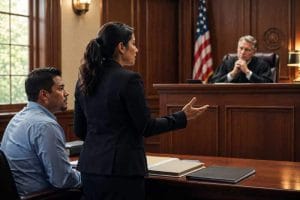
A Stokes interview can come up after a couple has already submitted forms, supporting evidence, and even attended a first appointment. These interviews are often scheduled when USCIS has questions or needs additional verification to determine whether the marriage is bona fide or entered into for immigration purposes.
At Curbelo Law, we understand this notice can feel stressful because a real relationship can feel like it is being judged in a process designed to look for inconsistencies.
Take a breath. Being scheduled for a second interview does not automatically mean your case is lost or that USCIS has already decided your marriage is not real. It means you should prepare carefully, practice answers without improvising, and show up with clear evidence so nerves do not turn into contradictions.

If you need support, attorney Carolina T. Curbelo can help you prepare your case and walk in with more confidence.
In this guide, you will find:
- A step-by-step breakdown of the Stokes interview.
- Sample questions to practice separately.
- How to organize strong evidence and what to do next, even if the case gets complicated.
On this page
What a Stokes interview is and why USCIS schedules it
A Stokes interview is typically scheduled when USCIS wants to verify that the marriage is bona fide. It is a more in-depth follow-up interview designed to confirm the relationship is genuine.
In addition to the relationship, the officer may review parts of the I-485 to confirm admissibility and consistency in your history, so it helps to review what was submitted before the appointment.
USCIS explains in its Policy Manual that an interview may be conducted with one or both parties, depending on what the officer needs to adjudicate the case. It can help to review how USCIS handles interviews in family-based cases so you understand the official framework and arrive with realistic expectations.
Common signs that can trigger a Stokes interview
There is no single universal checklist, but these factors often increase the chances of a second appointment:
- Limited, outdated, or poorly organized evidence of living together.
- Discrepancies between forms, documents, and prior answers.
- Frequent address changes or periods apart without clear supporting documentation.
- Special relationship circumstances that require explanation and evidence.
- Other factors can increase scrutiny, such as a short relationship history, communication barriers, or complex immigration background.
What to expect in a Stokes interview step by step
A USCIS Stokes interview is usually longer, more detailed, and more emotionally demanding than an initial interview. In practice, it often follows this sequence:
- You arrive together, your identities are verified, and in many cases you are placed under oath.
- The officer may start with both of you and then separate the couple.
- Each spouse is interviewed separately with similar questions about your living situation and daily routine.
- Answers are compared and, if the officer sees meaningful differences, you may be brought back together to clarify them.
- The case may be held for further review or followed by a request for additional evidence, depending on what is observed.
Separate interviews and answer comparisons
In many cases, the officer interviews each spouse separately and compares answers. If you do not remember a detail, say so calmly and answer only what you know with certainty. You can also have an attorney present.
Length and what the interview day is like
The interview can last for hours and may move through categories. It helps to arrive with organized evidence and a reviewed timeline so you are not improvising.
How to prepare for a Stokes interview without improvising
In many cases, a Stokes interview comes up during adjustment of status. Before practicing answers, it helps to review the adjustment of status steps and align your evidence with what you already filed.
If there is a language barrier, plan ahead for an appropriate interpreter under your local office rules to avoid misunderstandings on interview day.

The one-page sheet that prevents confusion
Before you practice, it helps to prepare a one-page sheet with verifiable details to review:
- Addresses and approximate move-in dates.
- Current jobs, work schedules, and how each of you gets to work.
- Household payments: rent or mortgage, utilities, and how they are paid.
- New evidence since the first interview, organized by date.
A clear relationship timeline
A strong timeline includes how the relationship began, when you started living together, moves, jobs, travel, family events, and any periods apart. The goal is not to memorize. It is to understand your story with consistent approximate dates and documentary support when possible.
Real household routines
Effective preparation is not rehearsing lines. It is reviewing your day-to-day life:
- Who wakes up first and why.
- How you divide household tasks.
- Where you keep common items.
- What you do after work.
- Which habits you share and which you do not.
Sensitive topics without rigid answers
If you keep finances separate, live with family, have periods of distance, or have sensitive personal circumstances, the key is to explain the reason clearly and show evidence of a real relationship and coordinated day-to-day life.
Evidence and documents you should consider bringing
For many couples, the problem is not lack of evidence. It is lack of organization. Before assembling your packet, it helps to review how to get a Green Card step by step to confirm your evidence matches the type of filing and where you are in the process.
If the petitioner is a U.S. citizen, it is smart to confirm the core case requirements early and focus on the type of evidence that carries the most weight for a bona fide marriage. For that, it helps to review how to sponsor your foreign spouse to come to the U.S. and organize documents and answers with a consistent strategy from start to finish.
Basic identity and case documents
- Valid photo ID for both spouses.
- Passport for the immigrant spouse.
- Proof of citizenship for the petitioner (if applicable).
- Marriage certificate.
- Employment letters and recent pay stubs (if available).
Bring originals when available for comparison, especially passports, vital records, and prior divorce documents if applicable.
Proof of living together and finances
- Lease or mortgage, or letters from the landlord.
- Utilities showing the same address.
- Coordinated financial evidence: transfers, payments, accounts, or a shared budget.
- Joint tax returns, if applicable.
- Insurance showing beneficiaries and family coverage.
Social and family evidence
- Photos with real context and approximate dates.
- Events with family and shared friends.
Recommended way to organize evidence
- An index by category.
- Dividers by year or time periods.
- Clear copies, with originals ready if requested.
If your case has already received a prior request, this guide on how to respond to a Request for Evidence (RFE) can help you stay focused and avoid responses that create confusion.
2026 Sample Stokes interview questions
Stokes interview questions are often detailed and repeated because the goal is to compare answers and spot inconsistencies. The safest way to practice is separately, with one simple rule: if you do not remember a detail, do not invent it.

1) Home and living arrangements
- Describe what you see when you walk into the home and which room is to the left and right.
- How many floors does the building have and what floor do you live on?
- How many bathrooms are there and which one does each of you usually use?
- Where do you keep cleaning supplies, medications, and basic tools?
- Where are spare keys kept and who has them?
- Which side of the bed does each person sleep on and what is on each nightstand?
2) Daily routine and recent life (24 to 72 hours)
- Who wakes up first on workdays and around what time?
- What did you buy the last time you went grocery shopping and who paid?
- What did you eat for breakfast yesterday and who made it?
- What did you do last weekend, by day and in general order?
- About what time did each of you get home yesterday and what did you do when you arrived?
Practical tip: For recent-life questions, describe a simple sequence without embellishment.
3) The relationship: how it started and how it developed
- Where and how did you meet? Who made the first move?
- What was your first date and where did you go?
- When did the relationship become serious and why?
- When did you decide to move in together and what motivated that decision?
- What do you have in common and what is different between you?
4) Proposal, wedding, and celebration
- Who proposed and what was that day like?
- Was there a ring? Who chose it and where was it purchased, generally?
- Where did you get married and who attended?
- Was there a party or reception? Why or why not?
5) Family, friends, and social circle
- Name two close friends of your spouse and how you met them.
- Which family members do you speak with most often and how do you communicate?
- What did you do together for Christmas, New Year’s, or a recent birthday, and with whom?
Practical tip: Focus your answer on verifiable facts.
6) Work, schedules, and verifiable details
- Where does your spouse work and how do they usually get there?
- What is your spouse’s typical schedule and which days are they off?
- Who carries the health insurance and what is the company or plan, generally?
Practical tip: If you do not know a name or a detail, do not invent it.
7) Finances, accounts, and household expenses
- How much do you pay for rent or the mortgage, and when is it due?
- Which utilities are in whose name and why?
- How do you divide expenses: transfers, cash, cards, separate accounts?
- Who paid the immigration filing fees and how were they paid?
Practical tip: If you do not manage exact amounts, answer with reasonable approximate figures.
8) Documents and “cross-check” questions (the most important)
These questions come up when the officer compares what you say with what is in the file:
- Your form lists this address. Since when have you lived there, and who did you live with before?
- In your evidence packet, why is this document only in one person’s name?
- Who prepared the forms and how did you review them to confirm the information was accurate?
- Explain this date difference between your answer and what is shown on the document.
- What new evidence did you bring today that was not included at the first interview?
Practical tip: If there is a real discrepancy, explain it in one sentence and support it with evidence.
9) Sensitive personal questions and how to handle them
In some cases, officers ask uncomfortable questions to gauge whether you truly live together. Your answer should be brief, respectful, and consistent:
- When was the last time you went on a date or had one-on-one time together?
- How do you handle privacy and intimacy at home?
- What does each of you do when the other is sick or having a tough day?
Practical tip: Answer what was asked, and stop there.
Important: Some questions may seem simple or even out of place, but that is intentional. They are designed to confirm genuine cohabitation and consistency. Stay calm and do not invent answers.
Table: safe answers vs. answers that can harm the case
| Typical interview situation | Safe answer | Answer to avoid |
| You do not remember a detail (time, amount, brand, color) | Say you do not remember and answer only what you know for sure | Make it up to sound confident and then contradict yourself |
| The officer points out a difference with a document | Acknowledge it and explain the real reason in one sentence | Deny it or change your story on the spot |
| A utility or contract is only in one person’s name | Explain the practical reason and how you coordinate payments | Claim it is in both names when it is not |
| Questions about what you did yesterday or over the weekend | Describe a simple, real sequence with reasonable approximations | Tell a perfect story with invented details |
| Uncomfortable or personal questions | Answer briefly and directly, without volunteering extra information | Get defensive, argue, or overexplain |
| You think your answer may differ from your spouse’s | Answer based on what you know, without guessing what the other person said | Try to align in real time and correct yourself repeatedly |
A short at-home practice simulation
- You answer 20 home and routine questions.
- Your spouse answers the same 20 questions separately.
- Then you practice 15 timeline questions and 15 finance questions.
- Only review major differences and prepare the real explanation. Do not adjust your story just to make it sound perfect.

To complement your preparation for a marriage interview, this guide on marriage-based green card interview questions can also help when a couple needs to practice from the basics to more detailed topics.
Experience with the Stokes interview
At Curbelo Law, we have seen for years that this notice arrives with intense anxiety, not because the relationship is fake, but because the format can be intimidating. A real couple can freeze up under repeated or very specific questions. The goal is to prevent nerves from turning into inconsistencies.
Common situations in genuine marriages
- One spouse remembers a date by the month, and the other remembers it by the event connected to that date.
- One spouse manages payments and the other only knows the general picture.
- The couple lives with family and some utilities are not in both names.
- Fatigue and pressure cause an answer to come out incomplete.
Anticipating these differences helps you respond clearly and consistently.
Mistakes that can hurt a real case and how to avoid them
Memorizing scripts and guessing answers
Memorizing often fails because the order and wording of questions change. Guessing details is what most damages a real case.
Disorganized evidence or evidence without a direct connection
Submitting “everything” without structure can confuse the officer. It is better when your evidence aligns with cohabitation and the timeline, presented in a logical way.
Losing your composure
Staying respectful and clear is part of the strategy. If you do not understand a question, ask the officer to repeat it calmly and politely.
What happens after the Stokes interview
After the interview, USCIS may approve the case, request additional evidence, or issue a formal notice that requires a response. If the officer identifies significant inconsistencies, the case may be placed under additional review and lead to formal requests or negative decisions.
If you receive a request for evidence or follow-up
- Respond to exactly what is requested.
- Organize by points, with direct supporting evidence.
- Avoid irrelevant material.
If you receive a Notice of Intent to Deny, this guide on what it means to receive a NOID can help you understand the urgency and strategy.
What happens if you fail a Stokes interview
A failed Stokes interview does not always mean an immediate decision that same day, but it can indicate that USCIS believes you did not sufficiently prove a bona fide marriage or that it found meaningful inconsistencies.
Small differences, such as remembering a date with slight variations, are not always decisive. What raises concern is a major inconsistency or repeated inconsistencies, especially if they contradict forms or documents in the file.
What may be behind a negative outcome
- Contradictions about cohabitation, timeline, or finances.
- Insufficient or not credible evidence.
- Vague explanations for important differences.
- Prior errors on forms that become magnified in the interview.
USCIS also discusses fraud and misrepresentation in its Policy Manual, which makes it even more important not to invent answers. You can review how USCIS defines fraud and misrepresentation and approach the case strategically if things become more complicated.
What to do right away
- Wait for the official notice and read it carefully.
- Do not send improvised explanations.
- Prepare evidence and a coherent narrative.
- Get legal support if there is a risk of denial or more serious consequences.
Letter, notice, and Stokes interview appointment
When you receive the Stokes interview letter or notice, review it carefully. It will usually list the date, location, and documents USCIS expects you to bring. If something does not match your file or you do not have new evidence since the first interview, organize everything beforehand to avoid confusion over details.
To better understand the foundation of the process, it can also help to review official information on key forms such as the I-130 family petition and the I-485 adjustment application, then align your evidence with what you already submitted.
FAQs about a Stokes interview in the United States

How important is it to remember every detail?
You do not need to remember every detail perfectly. The important thing is not to invent answers. If you do not remember something, say so calmly and answer only what you know with certainty.
What documents usually help the most?
Documents that prove ongoing cohabitation and a shared life: proof of address, household payments, insurance, tax returns if applicable, and consistent social evidence.
What happens if you do not pass a Stokes interview?
The case may be placed under additional review and, in some scenarios, end in a negative decision. The most important thing is not to improvise and to respond with well-organized evidence.
Curbelo Law can help you prepare for a Stokes interview
A Stokes interview can feel like the most vulnerable moment in the process, but strategic preparation can reduce the margin for error. Attorney Carolina T. Curbelo can help you:
- Identify weak points in the file before the appointment and address them with evidence,
- Organize a clear, easy-to-review evidence packet for the officer,
- Practice a separate, realistic mock interview and prepare safe answers if a discrepancy comes up.
If you received a second interview notice or you are worried about consequences from inconsistencies, it is smart to act with a serious, personalized plan before interview day.
Let us know about your case We can help you