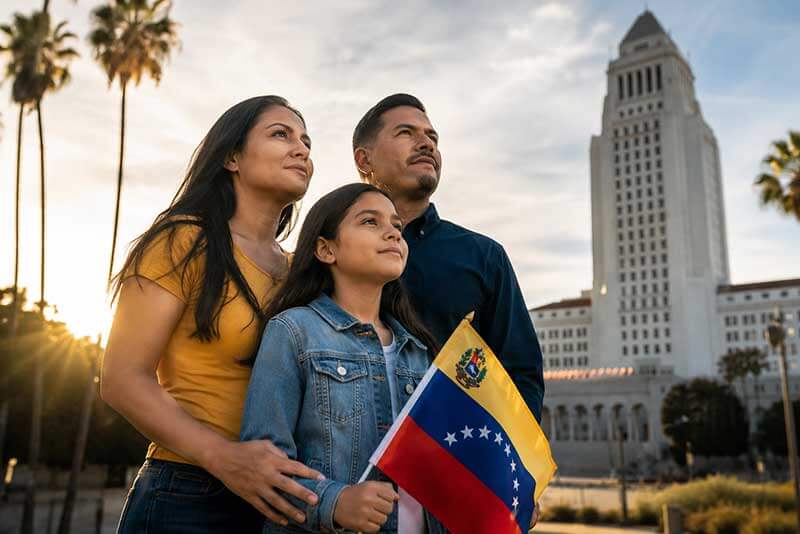
Currently, TPS for Venezuelans has undergone several changes since 2025 that directly affect many beneficiaries living in New Jersey, including terminations, court decisions, and exceptions that still protect certain individuals.
One of the most significant developments is that the general 2021 and 2023 Venezuela TPS designations were terminated.
However, certain beneficiaries with specific documentation remain protected and authorized to work under limited circumstances.
At Curbelo Law, we can review your documentation and determine how these changes affect your particular situation.
Let us know about your case We can help youOn this page
What Is TPS and Why Has It Been an Essential Protection for Venezuelans in New Jersey?
Temporary Protected Status, or TPS, is a temporary immigration protection that the Department of Homeland Security (DHS) may grant to people from certain countries when conditions make a safe return difficult.
For many Venezuelans who have built their lives in New Jersey, this protection has been especially important because, while it remains in effect, it may allow them to:
- Temporarily remain in the United States.
- Be protected from deportation based solely on a lack of lawful immigration status.
- Apply for authorization to work legally.
- Request authorization for certain travel, when applicable.

This has allowed many Venezuelans to work, support their families, and continue their lives in the United States while the conditions that led to the protection persist.
However, TPS does not automatically grant permanent residence or, by itself, create a pathway to a green card.
What Is the Current Status of TPS for Venezuelans in 2026?
TPS for Venezuela today is different from the program that was originally available under the 2021 and 2023 designations. This means that:
- Venezuela’s 2023 designation was terminated by DHS in 2025.
- Venezuela’s 2021 designation was also terminated, generally effective as of November 7, 2025.
- There is currently no new general designation allowing any recently arrived Venezuelan to apply for TPS.
- Certain beneficiaries retain valid documentation through October 2, 2026, depending on when it was issued and the applicable court orders.
- Litigation over the legality of the terminations is ongoing.
The impact has been significant. According to the Pew Research Center, the 2021 and 2023 designations covered more than 615,000 Venezuelan beneficiaries, the largest group affected by the recent TPS terminations.
These changes apply specifically to Venezuela. Other designations have followed different timelines, such as TPS for Honduras, whose dates and termination must be reviewed separately.
What Happened to TPS for Venezuelans in 2025?
To understand the current situation, it is important to distinguish between the 2021 and 2023 TPS designations. Several key developments occurred during 2025:
- January 17: DHS extended the 2023 designation through October 2, 2026, and established a process for certain beneficiaries under both designations.
- Late January: The new DHS Secretary rescinded that decision.
- February 5: DHS announced the termination of the 2023 designation.
- September 8: DHS published the termination of the 2021 designation, effective November 7, 2025.
These actions led to several lawsuits. In January 2026, the Ninth Circuit concluded that DHS had exceeded its authority when reversing certain protections.
However, earlier Supreme Court decisions allowed the terminations to remain in effect while the case proceeded.
Was TPS for Venezuelans Extended Through October 2026?
Yes. An extension of TPS for Venezuelans was published in January 2025 and established October 2, 2026, as the expiration date.
However, DHS later rescinded that extension, followed by several court decisions.
Currently, the October 2, 2026 date remains relevant only for certain beneficiaries and documents. It is not a general extension for all Venezuelans.
Who Can Keep TPS Through October 2, 2026?
USCIS has indicated that certain beneficiaries who received TPS-related documentation with an October 2, 2026 expiration date may retain their protection and employment authorization through that date.
Documents that may be relevant include:
- Employment Authorization Document (EAD).
- Form I-797, Notice of Action.
- Form I-94.

One especially important factor is when the document was issued. USCIS maintains an exception for certain documentation expiring on October 2, 2026, that was issued no later than February 5, 2025.
Therefore, two Venezuelans who previously had TPS may now find themselves in different legal situations.
Is the TPS Work Permit for Venezuelans Still Valid?
It depends on the document and the person’s particular circumstances. For many beneficiaries, the termination of TPS also meant the end of employment authorization based solely on that benefit.
However, USCIS recognizes that certain TPS-related documents remain valid through October 2, 2026, under the exceptions described above.
For this reason, it is advisable to review:
- The category shown on the EAD, generally A12 or C19 for TPS.
- The expiration date.
- The date USCIS issued the document.
- Any Form I-797 related to a renewal.
- Whether another independent basis for lawful employment exists.
How Long Can You Apply for TPS for Venezuelans in 2026?
There is currently no new registration period for first-time TPS applications under Venezuela’s previous designations.
To apply for TPS, a person generally must:
- Have a current TPS designation available.
- Meet the required continuous residence and physical presence dates.
- File the application during the applicable registration period, unless a late-registration exception applies.
Therefore, a Venezuelan who recently arrived in the United States cannot apply for TPS solely based on Venezuelan nationality.
What Documents May Be Important in a TPS Case?
Although there is currently no new registration period for TPS for Venezuelans, individuals with a pending case, a re-registration, or a late-registration situation may need to document different aspects of their immigration history.
Documents that may be relevant include:
- Proof of identity and nationality, such as a passport or birth certificate.
- Evidence of the date of entry into the United States, such as Form I-94 when applicable.
- Proof of residence in the United States, such as employment records, medical or school documents, or certain receipts and bills.
- Previous USCIS notices, especially Forms I-797 related to TPS.
- Previous EADs, if the person received employment authorization through TPS.
The documentation required will depend on the type of filing and the person’s specific immigration situation.
People who still have a pending application may also need to review how long TPS takes to be approved and whether USCIS has issued a request for evidence or any additional notice.
What Happens When a Venezuelan Loses TPS?
To understand what happens when TPS ends, the first step is to determine whether the person has another valid immigration status or form of relief. Depending on the circumstances, the person may:
- Return to a previous immigration status, if it is still valid.
- Maintain another immigration status or form of relief lawfully obtained while holding TPS.
- Evaluate other immigration options for which the person may qualify.

If there is no other legal basis for remaining in the United States, the person may face immigration consequences, including deportation proceedings.
For that reason, losing TPS does not necessarily mean there are no other options available.
What Is CBP Home and How Does It Relate to the End of TPS?
If your TPS has already ended, it does not mean that you must immediately leave the United States. Before making a decision, you should determine whether you have another legal basis to remain here. For example, you may have a political asylum case, a family-based petition, or another form of immigration protection.
For people who do not have another authorization to remain in the country, DHS is promoting voluntary departure through CBP Home, a program that may offer:
- Free travel assistance to depart the United States.
- A $2,600 incentive for those who meet the eligibility requirements.
- Forgiveness of certain fines related to unlawful presence.
In addition, some Venezuelans still have TPS-related documentation that remains valid through October 2, 2026, so each case should be reviewed individually before beginning a voluntary departure process.
What Alternatives Are Available After TPS for Venezuelans?
Having had TPS does not, by itself, prevent someone from applying for another immigration benefit.
Depending on the person’s immigration history and eligibility, options may include asylum, adjustment of status, family-based petitions, or other forms of protection, such as:
- Asylum: If there is a fear of persecution based on a protected ground, it may be necessary to determine whether the person meets the requirements to apply for asylum in the U.S.
- Family petitions or adjustment of status: Some people may have an independent pathway through a family member or another immigration category. To determine who may qualify for permanent residence after having TPS, it is necessary to review the person’s manner of entry, immigration history, and the requirements of the available pathway.
- Other humanitarian relief: Depending on the circumstances, protections other than TPS may be available.
- Deportation defense: If immigration proceedings have already begun, the person may evaluate options to stop deportation.
- Appeals or reopening: A prior immigration decision may require determining whether it is appropriate to appeal an immigration case or reopen a case.

Having had TPS also does not automatically eliminate previous immigration issues or guarantee that a person qualifies for another form of protection.
If you currently do not have valid immigration status, you can also review our guide on options to obtain legal status in the United States.
Latest News About TPS for Venezuelans in 2026
The latest news about TPS for Venezuelans shows that the issue has not yet been fully resolved in the courts.
Some of the most important developments include:
- June 2026: The Supreme Court decided Mullin v. Doe, a case involving the termination of TPS for Syria and Haiti.
- The Court determined that the law limits judicial review of certain decisions made by the DHS Secretary regarding TPS, particularly when they involve nonconstitutional claims.
- This decision may affect other litigation involving TPS terminations, including the case involving Venezuela.
- In the Venezuelan case, the Government asked the Supreme Court to review the Ninth Circuit’s decision finding that the manner in which DHS terminated the protections was unlawful.
- Mullin v. National TPS Alliance, No. 26-48, remains pending before the Supreme Court. On August 14, 2026, the Court requested a response to the Government’s petition, with a deadline of September 14, 2026.
For this reason, the situation may still change. To check the current status of this program, periodically consult the USCIS page about TPS for Venezuela.
Frequently Asked Questions About TPS for Venezuelans
What Is Happening With TPS for Venezuelans?
Venezuela’s general 2021 and 2023 designations were terminated. However, certain beneficiaries with specific documentation may retain TPS and employment authorization through October 2, 2026.
Litigation related to the terminations is ongoing.
How Long Can You Apply for TPS for Venezuelans in 2026?
There is currently no new general registration period for first-time applications under Venezuela’s TPS designation. Pending cases or situations related to previous registrations must be reviewed individually.
What Is TPS for Venezuelans?
It is a temporary immigration protection that allowed certain eligible Venezuelans to remain and work legally in the United States while the designation was in effect.
What Will Happen to Venezuelans in the United States?
It depends on each person’s circumstances. Individuals who lose TPS may retain another immigration status they already have or explore other options, such as asylum, family-based petitions, or other forms of relief.
Those who have no other legal basis to remain may become subject to immigration proceedings.
Review Your Immigration Situation After the TPS Changes
TPS for Venezuela has changed several times in a short period, and not all beneficiaries currently have the same rights or expiration dates.
The date on your EAD, when you received your documents, the designation under which you obtained TPS, and any other pending immigration case can affect the outcome.
At Curbelo Law, our immigration lawyers in New Jersey can review your history and determine what immigration protection or alternative may be available after the changes to TPS for Venezuelans.
Let us know about your case We can help you