
Let’s be clear: Does VAWA affect the abuser? Filing Form I-360 does not automatically result in criminal charges, fines, deportation, or other penalties against the abuser. A police report, protective order, or separate court proceeding may have its own consequences.
A VAWA self-petition allows certain victims to seek immigration protection without depending on the person who abused them. As a result:
- The abuser does not need to authorize the petition.
- The abuser does not have to participate in the process.
- USCIS does not automatically notify the abuser that you filed a petition.
USCIS provides special confidentiality protections for these petitions.
This does not prevent the abuser from facing separate consequences if there is a police report, protective order, criminal case, or another independent legal action.
Let us know about your case We can help youOn this page
Does VAWA affect the abuser when Form I-360 is filed?
A VAWA self-petition prepared with the help of a VAWA lawyer does not automatically lead to criminal penalties, fines, arrests, or a deportation order against the abuser. VAWA is an immigration self-petition, not a temporary visa.
Its primary purpose is to allow victims to seek immigration relief without the abusive family member’s authorization, participation, or cooperation.
USCIS explains that this process can be initiated without the abusive relative’s knowledge, consent, or participation. Its effects must be distinguished from those of a police report or court proceeding.
VAWA does not automatically initiate criminal proceedings
Filing a VAWA petition with USCIS is not the same as filing a criminal complaint. On its own, the self-petition does not:
- File criminal charges against the abuser.
- Order the abuser’s arrest.
- Impose a fine.
- Automatically initiate deportation proceedings against the abuser.
- Require the abuser to compensate the victim.
VAWA is part of the federal immigration system. If a crime, police investigation, or domestic violence case is involved, any related consequences may arise through separate proceedings.
The police are not automatically notified when you file a VAWA petition
Filing a VAWA self-petition with USCIS does not constitute filing a police report.
However, some victims may already have police reports, protective orders, court records, or other documents related to the abuse. These may serve as evidence in a VAWA case, but they arise from proceedings separate from the immigration petition.
VAWA and the U visa have different requirements. The U visa is intended for victims of certain crimes and requires a law enforcement certification concerning the victim’s helpfulness.
If both forms of relief may apply, our U visa lawyers can assess them separately. Filing a police report alone does not establish eligibility.
The abuser generally cannot stop a VAWA petition
Form I-360 can be filed without the abusive family member’s signature, permission, knowledge, or cooperation. Because the victim files the petition independently, the abuser cannot withdraw it simply by calling USCIS.
If the abusive family member previously filed Form I-130 for you, it is important to distinguish that family petition from the Form I-360 you file on your own behalf. A threat to withdraw the I-130 is not the same as withdrawing your I-360.
At Curbelo Law, Carolina and her team review receipt notices and any pending Form I-485 before determining how to proceed. Deadlines and the ability to change the basis of an adjustment of status application depend on the individual case.
Will the abuser know that I filed a VAWA petition?
Generally, no. USCIS does not automatically notify the abuser. 8 U.S.C. § 1367 protects the confidentiality of pending and approved petitions, including their existence, subject to statutory exceptions. These protections generally end when the person naturalizes, although they may be reinstated in certain circumstances.
Federal confidentiality protections cannot prevent someone from accessing your mail or a shared account. To reduce this risk:
- Before filing Form I-360, arrange a safe method of communication and mailing address. The official instructions allow you to use, among other options, an attorney’s address, a trusted person’s address, or a P.O. box.
- If you move, consult the special USCIS procedures for VAWA cases and make sure your address is updated in every relevant case.
Do you have to leave the abuser to apply for VAWA?
No. A victim does not have to end the relationship before filing a VAWA self-petition.
You may still be in the relationship or be in the process of separating. What matters is meeting VAWA eligibility requirements and being able to establish battery or extreme cruelty.
Can USCIS share information with the abuser?
As a general rule, USCIS cannot disclose protected information about a VAWA self-petition to the abuser. This includes sensitive information related to the immigration process.
These protections also apply to other federal agencies under the applicable rules.
The law provides limited exceptions to confidentiality. It also restricts certain adverse immigration decisions based solely on information supplied by the abuser.
USCIS may consider evidence obtained from permissible sources. That is why we describe these safeguards as strong federal protections without promising absolute secrecy.
Does USCIS have to interview the abuser?
The abuser does not need to participate in the VAWA self-petition process. This means the abuser:
- Does not have to be interviewed by USCIS.
- Does not need to authorize the petition.
- Is not required to provide evidence or cooperate with the process.
USCIS evaluates the victim’s eligibility and the submitted evidence while observing VAWA’s special confidentiality protections.
What happens to the abuser if there is also a criminal case?
To understand whether VAWA affects the abuser when a criminal case is involved, distinguish the Form I-360 petition from any investigation or court order. The abuser may face consequences from those separate proceedings, not because USCIS filed a VAWA case against them.
For example, an abusive situation may also involve:
- A police report.
- A protective order.
- Domestic violence charges.
- Assault, threats, or other criminal offenses.
- Family court proceedings involving custody or protection.
These matters follow their own rules before law enforcement agencies and courts. In New Jersey, a criminal complaint and a civil protective order serve different purposes.
A temporary order may prohibit contact or establish interim arrangements concerning the home and children. The New Jersey State Police explains these options.
If an order or hearing already exists, review its date, terms, and any documents that may serve as evidence before USCIS. Form I-360 does not replace protective measures ordered by a court.
What types of abuse may qualify under VAWA?
VAWA is not limited to physical violence. USCIS may also consider extreme cruelty, which can include conduct such as:
- Threats.
- Intimidation.
- Controlling behavior.
- Manipulation.
- Psychological abuse.
- Financial abuse.
Context matters: a single serious incident or a pattern of conduct may constitute abuse. USCIS assesses extreme cruelty based on the circumstances and recognizes that it may include physical and nonphysical acts used to exert power or control over the victim.
Does psychological abuse qualify under VAWA?
Yes. Psychological abuse may be relevant to a VAWA petition when it constitutes extreme cruelty, even if it is not part of a repeated pattern.
Some potentially relevant behaviors include:
- Intimidation.
- Repeated humiliation.
- Threats.
- Manipulation.
- Using immigration status to control the victim.
- Repeated behavior intended to create fear or dependency.
However, an isolated argument, occasional insult, or difficult relationship does not necessarily meet the VAWA standard on its own.
Does financial abuse qualify under VAWA?
Yes. Financial abuse may be part of a VAWA case when used as a means of control. Examples include:
- Controlling all household finances.
- Preventing the victim from working.
- Withholding the victim’s income.
- Denying access to bank accounts or basic resources.
- Using financial dependence to threaten or intimidate the victim.
However, not every disagreement about money constitutes extreme cruelty. USCIS considers the full circumstances and whether there is a pattern of abuse, threats, or control.
Does infidelity count as abuse under VAWA?
Infidelity alone generally does not establish extreme cruelty. An extramarital affair and the emotional pain it causes do not automatically satisfy the VAWA standard.
The question is whether other conduct occurred alongside the infidelity, such as:
- Threats.
- Coercion.
- Humiliation.
- Manipulation.
- Financial or immigration-related control.
- Other repeated abusive behavior.
USCIS considers these behaviors together to determine whether they meet the standard required under VAWA.
How can you prove abuse in a VAWA petition?
USCIS may consider any credible evidence relevant to the abuse. There is no single document that every petitioner must provide.
Depending on your circumstances, useful evidence may include:
- Police reports.
- Protective orders or court records.
- Text messages and emails.
- Photographs.
- Medical records.
- Psychological evaluations.
- Statements from family members, friends, or other individuals.
- The victim’s own personal statement.
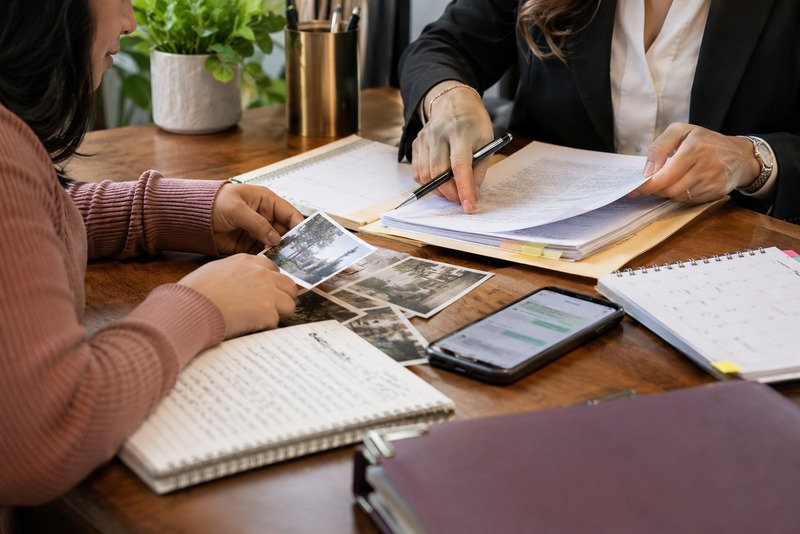
Your evidence should explain what happened, how it happened, and how it affected you. In cases involving psychological abuse or threats to call immigration authorities, Carolina and her team organize a timeline and compare it against available messages, documents, and witness statements.
The absence of physical injuries or a police report does not, by itself, determine eligibility.
In addition to the abuse, USCIS separately evaluates the qualifying family relationship, the relative’s immigration status, shared residence, and, when applicable, good-faith marriage and good moral character.
The Form I-360 instructions permit any relevant credible evidence, but USCIS determines how much weight to give it. A detailed personal statement can help, but it does not replace evidence of the other eligibility requirements.
Do you need a police report to file a VAWA petition?
No. A police report, protective order, or conviction against the abuser is not a mandatory requirement in every VAWA case.
If available, these documents may serve as evidence. Otherwise, a detailed personal statement, messages, medical or psychological records, and witness accounts may help document specific incidents.
USCIS assesses the credibility and weight of each piece of evidence. A criminal conviction against the abuser is not required for USCIS to consider Form I-360.
Sample emotional abuse statement for VAWA
A personal statement can help explain abusive experiences that may not be fully documented elsewhere.
Your statement can describe:
- When the abuse began.
- What the abuser did or said.
- Whether there were threats, financial control, or immigration-related coercion.
- How often the incidents occurred.
- How the abuse affected you.
- Whether anyone witnessed it.
Hypothetical example: “My spouse began controlling our household finances and threatening to call immigration authorities whenever I did not do what they wanted. I would explain when this happened, which messages I still have, and how it affected me.”
Your actual statement must describe your own experiences, dates, and details. Do not present a sample as though it describes events that never occurred.
Can VAWA affect children or other family members?
VAWA is not limited to married women. Depending on the circumstances, the following individuals may be eligible to self-petition:
- Abused spouses of U.S. citizens or lawful permanent residents.
- Abused children of U.S. citizens or lawful permanent residents.
- Certain parents abused by their U.S. citizen sons or daughters.
In some cases, a spouse filing a VAWA self-petition may also include eligible children as derivative beneficiaries.
Does VAWA determine child custody or visitation?
The VAWA immigration process does not, by itself, determine matters such as:
- Child custody.
- Visitation arrangements.
- Parental rights.
These issues are generally resolved in separate family court proceedings. If you already have a protective order or a court decision concerning your children, sharing a copy with your immigration attorney can help clarify what the family court has decided and what you must establish before USCIS.
How does USCIS investigate a VAWA case?
USCIS reviews the submitted evidence to determine whether the self-petitioner meets each eligibility requirement.
Among other things, USCIS may examine:
- The qualifying family relationship.
- The relevant family member’s U.S. citizenship or lawful permanent resident status.
- Shared residence, when required.
- Whether the marriage was entered into in good faith in spousal cases.
- Whether battery or extreme cruelty occurred.
- The good moral character requirement, when applicable.
USCIS may request additional information through a Request for Evidence (RFE) or identify potential problems through a Notice of Intent to Deny (NOID). In either situation, review the notice, response deadline, and specific eligibility issue before replying.
Confidentiality rules remain important throughout the review. The abuser does not become a participant in the case simply because USCIS needs to verify the petition.
If USCIS ultimately denies the petition, the available review options depend on the type of decision and the deadlines stated in the notice.
What happens after you file Form I-360?
USCIS reviews the self-petition and supporting evidence. During this process, it may:
- Request additional evidence through an RFE.
- Issue a prima facie determination in certain cases.
- Ultimately approve or deny Form I-360.
A prima facie determination is preliminary. It may allow access to certain benefits while USCIS continues reviewing Form I-360, but it is not an approval. Even after the self-petition is approved, you must still meet the requirements for adjustment of status or consular processing to obtain a Green Card.
- Before traveling: Filing or obtaining approval of Form I-360 does not, by itself, authorize you to leave and reenter the United States. Traveling outside the United States with a VAWA case requires reviewing your circumstances and any applicable travel authorization.
- If USCIS schedules an interview: Understand what may be reviewed during a VAWA-based Green Card interview. Carolina and her team can compare your statement and evidence with the notices in your file to help you prepare truthful, fact-based answers without memorizing a script.
Frequently asked questions about how VAWA affects the abuser
Does a domestic violence case affect the abuser?
It may if there are separate legal proceedings, such as a police report, protective order, or criminal charges.
However, filing a VAWA self-petition with USCIS does not automatically trigger those consequences.
What happens to the abuser in a VAWA case?
The abuser generally does not participate in the self-petition, does not need to authorize it, and does not automatically receive information about the case.
VAWA primarily protects the victim’s ability to pursue an immigration benefit independently.
Does the so-called “VAWA visa” forgive criminal offenses?
VAWA does not automatically “forgive” criminal offenses. Although people often refer to a “VAWA visa,” the self-petition and any subsequent adjustment of status application are separate processes.
Some immigration grounds of inadmissibility may have specific exceptions or waivers for individuals protected by VAWA, while others may prevent eligibility.
If you have a criminal history, the exact offense, arrest, or conviction should be reviewed before filing an application.
Does a VAWA case affect my child?
It depends on your family situation. For example, certain children may qualify as derivative beneficiaries or file their own self-petitions if they meet the requirements.
Filing a VAWA self-petition does not automatically mean a court will change child custody arrangements or the abuser’s parental rights.
How long does a VAWA case take?
Processing times can change and depend on the form and USCIS workload.
Check the USCIS processing times tool and our USCIS processing times guide for the relevant form and category. If you also filed Form I-485, the I-360 processing time does not necessarily reflect the total wait for permanent residence.
Review your VAWA case with Carolina Curbelo
You do not have to wait until you experience severe physical violence to seek legal advice about VAWA. Immigration-related threats, psychological abuse, and financial control may be relevant, depending on the circumstances and available evidence.
Attorney Carolina T. Curbelo founded Curbelo Law in Ridgewood, New Jersey. Her practice includes VAWA matters before USCIS and cases in immigration court. During an initial review, the bilingual team can:
- Verify the qualifying family relationship and the evidence supporting each Form I-360 requirement.
- Review notices for previously filed Forms I-130 or I-485 and the deadlines they specify.
- Arrange a safe communication method and identify any separate criminal or family court proceedings.
At Curbelo Law, we have prepared VAWA cases involving psychological abuse and immigration-related threats. When there are no physical injuries or police reports, Carolina and her team organize the facts and compare them with the personal statement, messages, and other available evidence.
We have received reviews of our immigration work, including one describing an approved VAWA self-petition. We respect the privacy of every client and do not present that result as a guarantee of success in another case.
If you are concerned that the abuser may find out and want to know, “Does VAWA affect the abuser?” in your particular situation, tell us whether you have an I-130 petition, a court order, or an upcoming hearing. We can arrange a safe way to communicate and review the appropriate steps for each proceeding.
Let us know about your case We can help you