


Many people without lawful status wonder what happens when an undocumented immigrant returning to Mexico leaves the United States and whether they will have problems when they depart.
The real issue is what comes after, including immigration consequences, reentry bars, and what you should have resolved before traveling.
If you are Mexican, you should know that attorney Carolina T. Curbelo works in close daily collaboration with the Mexican Embassy. This strong relationship has allowed us to help hundreds of Mexicans with urgent immigration matters.
If you, a family member, a friend, or someone you know needs legal guidance, do not hesitate to contact us.
Let us know about your case We can help youOn this page
Can undocumented immigrants return to Mexico?
Undocumented immigrants can return to their country of origin, whether that country is Mexico, Venezuela, or somewhere else.
If you do not have a prior deportation order and do not have a criminal record, immigration authorities generally will not stop you from leaving the country.
Therefore, if you have a valid Mexican passport, you may board a direct flight to Mexico without being stopped simply because you are undocumented in the U.S.
What does happen when you leave is that:
- Your departure is automatically recorded in CBP systems.
- The U.S. government will know that you were in the country unlawfully and for how long.
- That information may have direct consequences if you ever try to return legally.
Important note: Leaving the United States after accumulating unlawful presence may trigger 3-year or 10-year bars to returning legally. Before buying a ticket or crossing the border, it is wise to review whether that risk applies to your case.
What should I do if I am being deported to Mexico immediately?
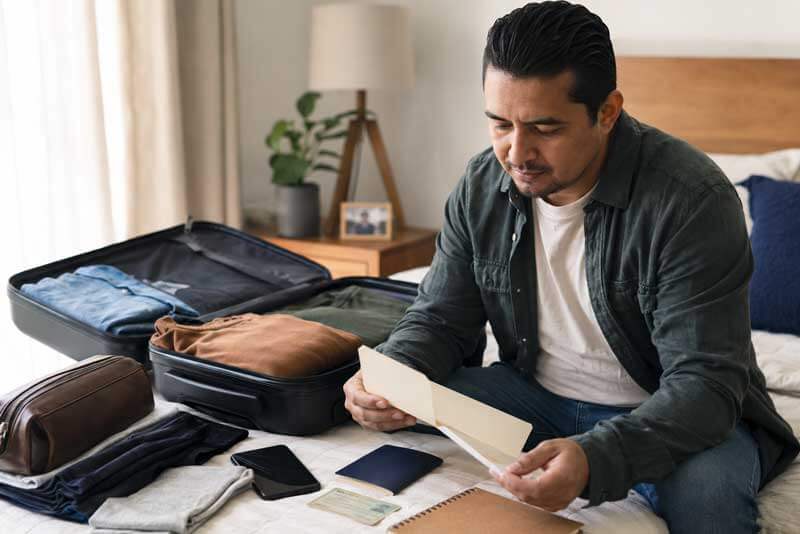
If your departure is not voluntary but forced, there are practical steps you should keep in mind:
- Call the Mexican consulate immediately at 1-520-623-7874. Consular staff may intervene to protect your rights during the process.
- Use WhatsApp to communicate with your family. It works with Wi-Fi and does not require an international phone plan.
- Memorize your relatives’ phone numbers before leaving. If you are detained, the authorities may confiscate your cell phone.
- Money in your detention center account will be given to you in cash up to $500 when you leave. If you have more than that, you may receive a check, which can be difficult to cash in Mexico.
- Keep your identity documents with you, not in your bag, so they are not lost during transport.
If you still do not have a final order, there may be legal options to stop or slow down the process. Attorney Carolina Curbelo can review your case and explain whether you may qualify for cancellation of removal before it is too late.
What should I expect during ICE transport?
If your deportation is forced, it is important to understand what may happen during transportation:
- If you have an ankle monitor, it may be removed before you leave.
- During transport, you may be handcuffed and shackled at the ankles.
- Your belongings may not be intact when you receive them, or they may not be returned to you.
- Transportation may be by bus or plane depending on your destination. Most deportations from the GEO detention center in Aurora, Colorado are by bus to El Paso, Nogales, or Laredo.
- Some people report mistreatment during transfers or deportation processes. If this happens, write down names, dates, places, or identification numbers whenever possible.
What do you need to return from the United States to Mexico?
The first step is having the correct documents before you leave. According to guidance from AFSC (American Friends Service Committee), these are the essential items:
- Valid Mexican passport. Without a passport, you cannot board an international flight. If you do not have one, you can request it at the nearest Mexican consulate by calling MEXITEL at 1-877-639-4835 or by making an appointment online.
- Official identification. For procedures in Mexico, you will need your INE voter ID and your CURP. Both can be processed through the consulate before you leave.
- Birth certificate. If you do not have it, the consulate may help you obtain it before departure.
- Your children’s documents. If you are traveling with children born in the United States, gather their apostilled birth certificates, school records, and vaccination records.
- Power of attorney. If someone will be handling your affairs in the United States, sign a power of attorney before leaving so that person can manage your financial or legal matters.
If ICE retained any of your documents, you can review how to get your passport back from ICE before planning your departure.
What do I need to return to my country of origin if I am already in Mexico?
If you are not Mexican and arrived in Mexico after leaving the United States, the International Organization for Migration (IOM) offers a completely free Assisted Voluntary Return (AVR) Program to help you return to your country.
The process has five phases:
- Orientation about the program and your options.
- Eligibility interview to assess your situation.
- Departure preparation, including document processing, lodging, food, psychosocial support, and medical checkups.
- Return with airport accompaniment and assistance during travel.
- Post-return assistance, including airport reception, food, hygiene kits, and support reaching your final destination.
At any time, you may decide not to continue with the process. To contact IOM in Mexico:
- Mexico City: (+52) 55 1910 5599
- Monterrey: (+52) 55 5332 0230
- Tapachula: (+52) 55 5944 6460
- Villahermosa: (+52) 55 2667 6997
- Ciudad Juárez: (+52) 55 2953 7348
- Tijuana: (+52) 55 2295 2679
- Email: iommexicoretornos@iom.int
- Facebook: @OIMMex
What should I do if I travel with children or leave my family in the United States?
There are additional matters you should resolve before leaving, especially if you have children or property in the U.S.:
- Do not sign any document given to you by immigration authorities without first consulting an attorney. If you have questions, our immigration lawyers in New Jersey can guide you.
- Take care of your finances before leaving. Sell or transfer your property and use banks to transfer your funds from the United States to Mexico.
- If a child will remain in the U.S. Sign a power of attorney authorizing the guardian to care for that minor while you are away.
- If your children travel separately from you, sign an authorization letter for the adult who will travel with them.
- Children of Mexican parents have the right to dual citizenship. However, U.S. citizen minors traveling to Mexico need a valid U.S. passport, and a notarized consent form from the other parent or guardian is recommended.
- Obtain more than one original birth certificate for each child, because you may need to submit one to the Civil Registry and keep additional copies.
- Avoid notarios and never request or buy fake birth certificates. Doing so can put your child’s dual citizenship at risk.
- The Mexican government requires two last names (the father’s and mother’s last names) on all official documents.
Can I leave the United States by plane, or should I cross by land?

Both options are possible.
- By plane: If you have a valid Mexican passport, you can board a direct flight to Mexico. The airline will verify that you can enter Mexico as a Mexican citizen. For TSA security screening, you will need valid identification.
- By land: You can also cross through authorized ports of entry at the border. Keep in mind that in some airports, such as Miami, CBP and ICE agents may appear at the boarding gate and request documentation.
We recommend that you always keep your identity documents with you and not in your bag.
Important: If you have an open case in immigration court, leaving the country can have serious consequences for that case. Before leaving, understand how to stop removal proceedings if that is your situation.
Can lawful permanent residents go to Mexico and return?
Yes. A person with a valid Green Card can leave the United States and return. However, if you have had criminal issues, even minor charges, it is wise to review when a misdemeanor can affect your immigration status before leaving the country.
If you want to analyze alternatives before returning to Mexico, it is helpful to understand your options to become legal in the United States based on your immigration situation.
What is the CBP Home program and how does it work?
The U.S. government currently promotes the use of the CBP Home app so certain people can register their voluntary departure from the country.
However, before using this program, it is best to consult with an immigration attorney because leaving voluntarily or self-deporting may affect future immigration filings.
If you received an official notice, review what a Notice to Appear means before deciding whether this program is the best option for your case.
What happens when you arrive in Mexico?
Mexico has prepared reception mechanisms for repatriated and deported people. When you arrive, you may have access to the following support depending on the port of entry:
- Proof of Repatriation. This is the first document you receive upon arrival. It is not a valid ID, but it is necessary to access consular services and support organizations.
- Financial support. The Mexican government gives each deported citizen 2,000 pesos (approximately $97) for transportation and reintegration expenses.
- “Mexico Embraces You” program. It offers guidance, access to identity documents, employment, and social programs for repatriated people.
- CURP and INE. To obtain these IDs in Mexico, you will need your birth certificate. If you do not have it, organizations such as the Kino Initiative in Nogales may help you process it.
To plan an immigration process from Mexico, consular processing for immigrant families may be relevant after you leave.
What safety precautions should I take when arriving in Mexico?
We know many people return to Mexico after years away and may not know the risks in border areas. That is why we include these practical recommendations from AFSC to help you arrive safely:
- Make a friend on the bus or plane and stay together for mutual support.
- Stay alert and calm. Blend in with others and obey the authorities.
- Be careful with possible extortion situations, especially in border areas. If someone asks you for money irregularly, stay calm and do not confront the person.
- Do not use phones offered by strangers to call your family. Coyotes may keep your contacts’ phone numbers.
- Create a code word with your family to confirm that you are speaking freely in case someone calls to demand ransom.
- Keep your documents with you, not in your bag.
What to do when you arrive at the Repatriation Center
Nogales is one of the most common ports of entry for people deported from Arizona and Colorado. This is what you can expect when you arrive:
- When you get off the bus, your handcuffs will be removed and you will be able to collect your belongings, which will probably be in clear plastic bags.
- Then you will enter the Repatriation Center, where you will receive your Proof of Repatriation, a document with your photo and personal information. It is not a valid ID, but it is essential to access consular services and support organizations.
- Inside the center, there is a Red Cross station for immediate medical needs.
- When you leave, you will be asked whether you want to be taken to the Comedor. The answer should be yes, even if you are not hungry, because that is where you will find most available services.
Specific precautions for Nogales
- Avoid walking alone near the border area or accepting help from strangers, especially in areas where criminal organizations may operate.
- Use phones only inside the Kino Initiative. On the street, coyotes may offer help making calls in order to obtain your contacts’ phone numbers.
- Do not accept work from people on the street. It is often a trick used for kidnapping.
- Do not speak loudly about money or mention it on the phone in front of strangers.
- Use transportation recommended by support organizations, the consulate, or the repatriation center. Avoid taxis or rides offered by strangers.
Services offered by the Kino Border Initiative
- One daily morning meal.
- Shelter for women and children for up to 7 nights, which may be extended case by case. Men are served at Albergue Juan Bosco with a 3-night limit.
- Help cashing detention center checks or money orders from the U.S.
- Online family searches if you do not have phone numbers.
- Clothing, shoes, and toiletries.
- Basic medical care, over-the-counter medications, insulin, and inhalers.
- Help processing your CURP and INE if you do not have them.
The Mexican Consulate in Nogales may pay for a bus ticket to your city or state of origin. This support is granted only once in a lifetime and only if you have your Proof of Repatriation.
Where can I ask for help to return to Mexico?
There are several organizations that can guide you before, during, and after your return. If you arrive in a border city other than Nogales, AFSC maintains a directory of migrant shelters and support centers in cities such as Tijuana or Mexicali.
You can find them at afsc.org.
If you need personalized legal guidance, remember that attorney Carolina T. Curbelo’s law firm works in close collaboration with the Mexican Embassy and can guide you directly on your case.
Is Mexico accepting deported migrants back?
Since the start of the Trump administration’s mass deportation operations in January 2025, Mexico has received thousands of deported people.
In the first few days alone, Mexico’s National Migration Institute (INM) received more than 56 people in Ciudad Juárez and 120 in Matamoros, most of them Mexican and Venezuelan.
The Mexican government processes deported people upon arrival and channels them to support and reintegration programs before transporting them to their places of origin.
Frequently asked questions about an undocumented immigrant returning to Mexico

What should I do if I want to return to Mexico and I am undocumented?
Apply for your Mexican passport at the consulate, organize your personal documents, and consult with an immigration attorney before leaving so you understand exactly what consequences your departure may have.
What do you need to return from the United States to Mexico?
A valid Mexican passport, identification for TSA, organized personal and children’s documents, and clarity about your current immigration situation.
What is the penalty for illegally emigrating to Mexico?
As a Mexican citizen returning to your own country, this point does not apply to you. The National Migration Institute processes your arrival and gives you access to support programs.
Can I return to the United States after going back to Mexico?
It depends on your immigration history. If your departure may affect a future visa, review immigration waivers to return legally with proper guidance.
To learn about the immigration requirements to enter the United States in the future, speak with an attorney before taking action.
Leaving the United States is a decision that can have lasting consequences. If you have an open case, children with U.S. citizenship, or any other factor that complicates your situation, consult an attorney before taking action.
At Curbelo Law, we have the support of an established relationship with the Mexican Embassy, which has allowed us to resolve urgent immigration cases for hundreds of families. Call us today.
Let us know about your case We can help you

